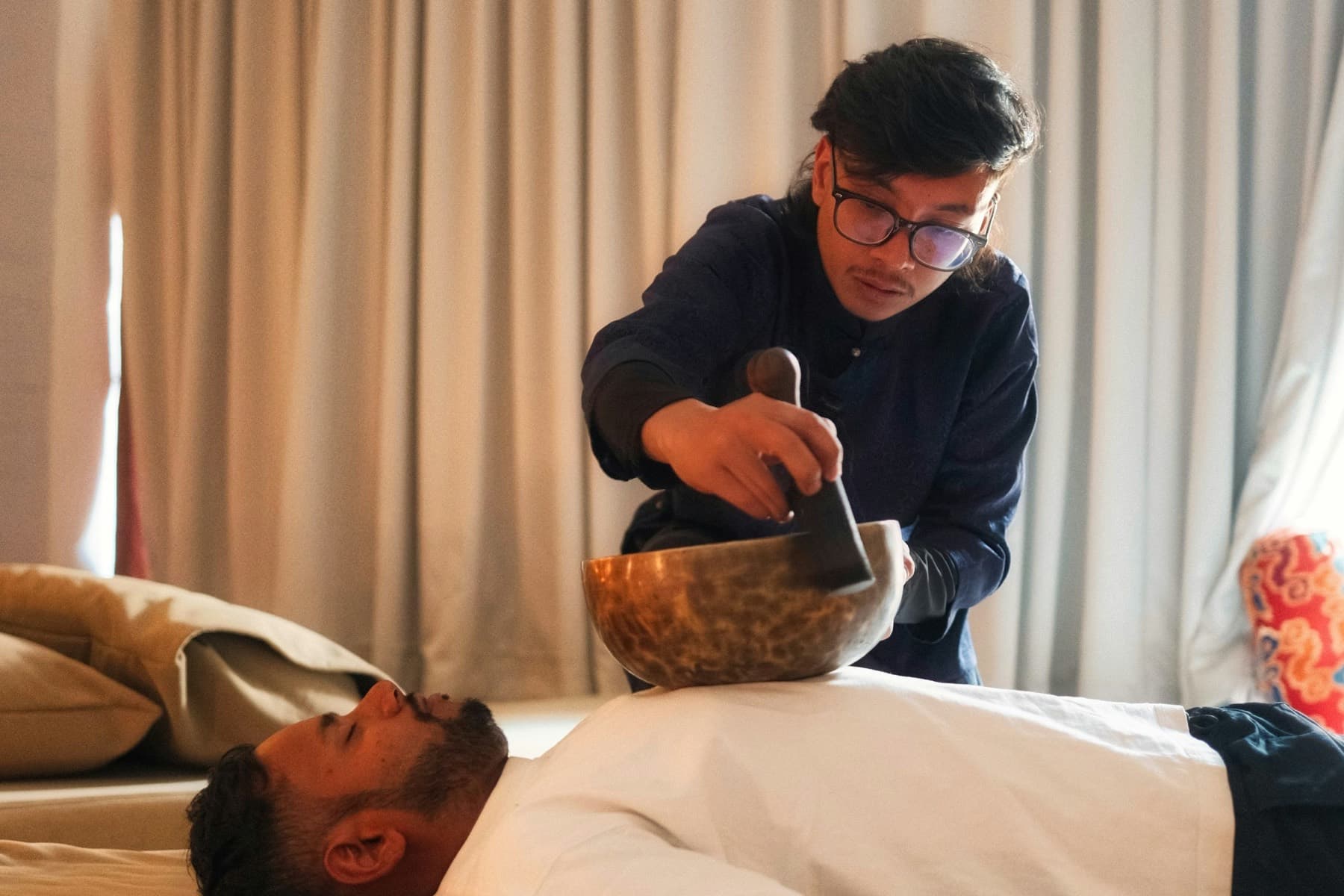
What sound healing is
Sound healing is a family of practices that use sound — from singing bowls and gongs to the voice — together with attentive listening, to help people relax and rest.
Sessions are usually calm and unhurried. A practitioner plays instruments around or near the listener, who sits or lies comfortably and simply listens.
Sound and vibration
Sound is vibration traveling through air and other materials. Low tones and sustained resonance can be felt as well as heard, which is part of what many people find calming about a session.
How a session feels differs from person to person, and from one setting to another.
A long tradition
Sound has accompanied ceremony, music, contemplation and community life in many cultures for centuries — including in the Himalayan region, where singing bowls are closely associated with Nepal.
GSHA encourages practitioners to share this history carefully, and to distinguish documented history from story.
Practice today
Contemporary practice includes individual sessions, group “sound baths”, workshops and sessions combined with meditation or yoga. Practitioners work in centers, studios, schools and community settings around the world.
Practicing responsibly
Sound healing supports relaxation and wellbeing. It is not a medical treatment and does not replace diagnosis or care from qualified health professionals.
Good practitioners explain what a session involves, ask about comfort, respect consent, and refer people to medical or mental-health professionals when that is what they need.
This guide is educational. Sound healing supports relaxation and wellbeing and does not replace diagnosis or treatment by qualified health professionals.